A common misconception in DeFi is that wallet security begins with protecting a private key and ends with checking the website address. Those steps matter, but they do not answer the most important question at the moment of signing: What will this transaction actually do? A transaction can come from a legitimate-looking application, use a familiar token, and still grant a smart contract permission to move assets later. The danger is often not that the wallet is “hacked.” It is that the user approves an action whose consequences were difficult to see.
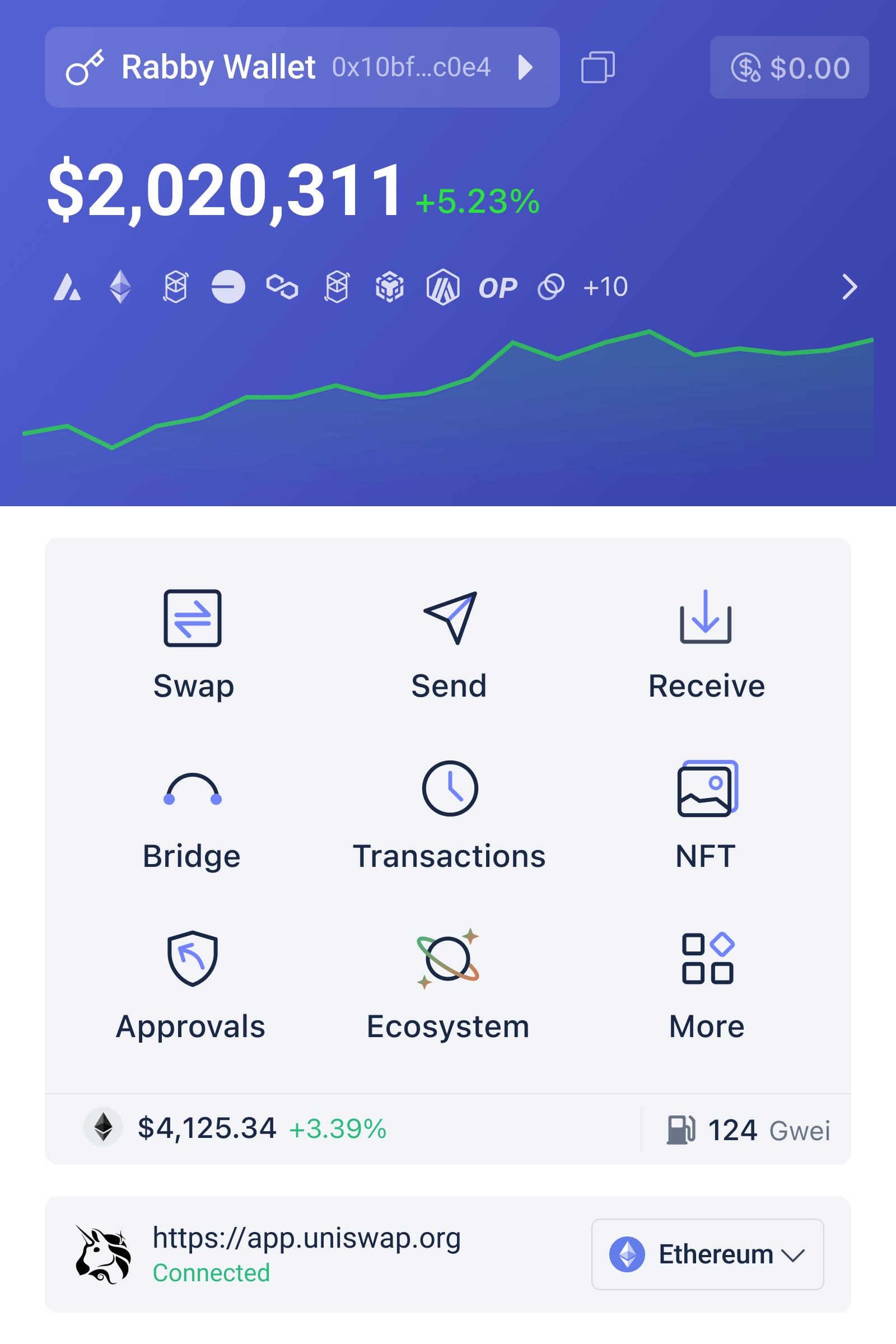
That is where Rabby Wallet’s transaction simulation becomes useful. Instead of showing only technical fields such as a contract address, gas limit, and calldata, a simulation attempts to preview the likely state change produced by a transaction. For a DeFi user in the United States moving between decentralized exchanges, lending markets, bridges, and newer protocols, this changes the wallet from a passive signing tool into a decision surface. It does not make risk disappear. It makes some classes of risk more legible before money moves.

From “Is this site real?” to “What authority am I giving it?”
Consider a familiar Saturday-afternoon scenario. A user finds a token-swapping application through a search result, connects a browser wallet, and prepares a swap. The site looks polished, the token symbols are recognizable, and the quoted exchange rate appears reasonable. The wallet then presents a request that seems related to the swap. In reality, the request might be an approval: permission for a contract to spend a token on the user’s behalf. The swap may be legitimate, but the approval can have a wider or longer-lasting effect than the user realizes.
This distinction is central to wallet security. A transaction is an instruction submitted to a blockchain; a signature is the user’s authorization for that instruction or for a message associated with it. Smart contracts cannot normally act beyond the permissions users provide, but users frequently approve more authority than they intended. Some token approvals allow a spender to use a specified amount, while others may authorize a very large amount for convenience. The practical risk depends on the contract, the allowance, the token standard, the application’s behavior, and whether the approval is later revoked.
Transaction simulation addresses this problem by asking a different question from ordinary wallet display. Rather than merely decoding the request, it estimates the resulting balance and permission changes if the transaction were executed in a particular blockchain state. A useful warning might indicate that a user will receive one asset, spend another, grant an allowance, lose a collectible, or interact with a contract carrying a potential risk signal. The exact presentation varies by wallet and network, but the underlying idea is consistent: interpret the transaction as an outcome, not just as raw instructions.
If you are preparing to install Rabby, use a verified distribution path and check that the browser extension is the expected one before entering any seed phrase or connecting accounts. A guide to the rabby extension can help with the installation workflow, but the security habit matters more than the download itself: never share a recovery phrase, never install a wallet from an unsolicited pop-up, and treat requests to “synchronize” or “verify” a wallet through a random form as a likely fraud attempt.
How simulation works—and what it can reveal
At a high level, a simulation executes a proposed transaction in an environment that imitates the current chain state without broadcasting the result as a final transaction. The wallet can then inspect what the call would likely change. If the user is swapping an asset, the expected output may be shown alongside the input. If the transaction is an approval, the wallet may expose the spender and the permitted amount. If a contract call attempts to transfer an unexpected token or change ownership of a digital collectible, that mismatch can become visible before signing.
This is a meaningful improvement over the historical wallet experience. Earlier interfaces often reduced a complex contract interaction to a confirmation button and a technical string. That design placed the burden on users to understand ABI-encoded data, contract addresses, token allowances, and network-specific behavior. Human-readable warnings do not solve the knowledge problem completely, but they reduce the distance between an action and its consequence.
The non-obvious point is that simulation is not the same as inspection. Inspection asks what a transaction contains: which function is called, which arguments are supplied, and which contract receives the call. Simulation asks what the call appears to cause under current assumptions. Both are valuable because a transaction can look ordinary at one level and dangerous at another. A contract function may be named in a way that sounds harmless while producing a surprising asset transfer, and a normal-looking swap can fail or behave differently if market conditions change before execution.
For users, this suggests a simple review sequence. First, identify the network and the application. Second, identify what leaves the wallet and what should return. Third, check whether the request creates an approval or another persistent permission. Fourth, compare the simulation with the action you intended to take. If the screen says you are signing a token transfer when you expected a swap, stop. If it shows an unfamiliar spender, pause and investigate. A warning is not automatically proof of malicious activity, but an unexpected outcome is a reason not to proceed.
The limits of a reassuring preview
Simulation is powerful precisely because it is conditional. It models what the transaction would likely do based on the state available at the time of review. That state can change before the transaction is mined. Prices can move, liquidity can be removed, a contract can depend on external data, and another transaction can alter the result. A simulation may also fail to capture every economic consequence, especially when a protocol’s risk lies in a complicated combination of contracts, governance assumptions, oracle design, or off-chain behavior.
There is also a difference between technical execution risk and financial risk. A simulation might correctly show that a user will receive a certain token while saying little about whether that token is liquid, fairly priced, redeemable, or issued by a trustworthy project. It may identify a suspicious contract interaction without judging the broader business model of the protocol. In other words, a clean preview is evidence about one proposed state change, not a complete investment thesis or a guarantee of safety.
Malicious interfaces create another boundary condition. A deceptive site may ask the user to sign a message rather than send a conventional transaction. Some signatures authorize permissions that are not immediately reflected as a balance change. Others may be replayable or usable by a party that obtains the signed data, depending on the message format and application design. Users should therefore distinguish between a transaction, a token approval, and a message signature. “No gas fee” does not mean “no risk.”
Simulation can also produce warnings that require judgment. A new protocol may trigger an alert because its contract is unfamiliar, not because it has been proven malicious. Conversely, the absence of a warning cannot certify that a protocol is safe. Detection systems rely on available contract information, heuristics, decoding support, and the assumptions of the simulation environment. They are best treated as an additional control layer—similar to a smoke detector—not as a substitute for knowing which application you intended to use.
A practical security model for DeFi users
For everyday use, it helps to divide wallet security into three layers. The first is identity security: protect the recovery phrase, use a device with a trusted browser, and avoid entering wallet credentials into websites. The second is application security: verify the domain, understand the protocol, and be wary of urgent prompts or unsolicited airdrop claims. The third is transaction security: inspect the chain, assets, recipients, approvals, and simulated result before signing. Many users focus heavily on the first layer and overlook the third, even though a legitimate wallet can faithfully sign a harmful request.
A Rabby-based workflow is most useful when it encourages deliberate friction at the right moment. For a small, familiar transaction, that review may take seconds. For a large transfer, a bridge, a new protocol, or an approval with broad spending authority, the correct response is slower: confirm the contract address through an independent source, consider a smaller test transaction, review existing allowances, and keep long-term holdings separated from experimental activity. A hardware wallet can add protection for private-key use, but it does not make a user’s approval decision correct. A hardware device can securely sign an unsafe transaction.
This leads to a sharper mental model: wallet security is not only about preventing unauthorized access; it is also about limiting authorized mistakes. DeFi transactions are often irreversible, and smart contracts execute according to code rather than a customer-service promise. The most valuable interface is therefore one that helps a person compare intention with effect. Did I mean to sell this asset? Did I mean to grant this contract continuing permission? Did I mean to interact with this chain? If the answer is unclear, the transaction is not ready.
What to watch as wallet interfaces mature
The likely direction of wallet design is toward better translation of contract behavior into ordinary language, but the hard problem will remain interpretation. More warnings can improve awareness, yet too many warnings may train users to click through them. The useful signal will be whether interfaces can distinguish a routine risk from a material mismatch, explain why a warning appears, and show which permission remains after the immediate transaction finishes.
Future improvements would matter most if they connect simulation with permission management, account segregation, and clearer explanations of uncertainty. For example, a wallet could make it easier to see not only the result of today’s transaction but also the authority granted to a contract afterward. That would help users understand the difference between a one-time action and an open-ended relationship with a protocol. Whether such tools become genuinely effective will depend on decoding quality, network support, protocol complexity, and users’ willingness to pause before signing.
For now, the practical conclusion is modest but important. Install a wallet carefully, verify the application you are using, read what the wallet says will change, and treat unexpected permissions as a stop signal. Transaction simulation is not a safety guarantee. It is a mechanism for turning opaque blockchain instructions into a more testable question: does this proposed action match what I intended?
FAQ: Rabby Wallet and Transaction Simulation
Does transaction simulation guarantee that a DeFi transaction is safe?
No. It provides a conditional preview of likely execution and can expose unexpected transfers, approvals, or contract effects. It cannot guarantee that a protocol is honest, that an asset will retain value, or that market conditions will remain unchanged before the transaction is confirmed.
What should I do if Rabby shows an unfamiliar warning?
Do not dismiss it automatically. Confirm the website domain, identify the contract and spender, compare the displayed outcome with your intended action, and investigate the protocol through an independent source. If you cannot explain the warning in plain language, reject the request and seek more information.
Is a token approval the same as a token swap?
No. A swap exchanges assets through a protocol, while an approval gives a specified contract permission to spend a token on your behalf. An approval may remain active after the swap, so users should review its amount and spender rather than treating it as a harmless preliminary step.
Can a hardware wallet replace transaction review?
No. Hardware wallets help protect private keys, but they will still sign an authorized transaction if the user approves it. The strongest setup combines key protection with careful application verification, simulation, permission review, and sensible separation between long-term holdings and experimental DeFi activity.